


Choosing the Best Caravan Toilet for Australian Travel
The right choice depends on how you travel, how much space you have, whether you stay off-grid, how much water you carry, and how you prefer to manage waste. This guide compares the main types of caravan toilets, their advantages and disadvantages, and where the Laveo DryFlush system fits.

Caravan Toilet Options at a Glance
| Feature | Cassette Toilet | Portable Chemical | Composting / Separation | DryFlush / Sealing |
|---|---|---|---|---|
| Water required | Usually | Usually | No | No |
| Toilet chemicals | Common | Common | Usually no | No |
| Holding tank | Yes | Yes | Separate containers | No traditional holding tank |
| Dump point often required | Yes | Yes | Depends on model | No cassette dump point |
| Waste separation | No | No | Usually | No |
| Compost management | No | No | Often | No |
| Ventilation installation | Varies | No | Often | No external ventilation required |
| Permanent installation | Usually | No | Varies | No |
| Portable | Limited | Yes | Model dependent | Yes |
| 12V power | Often | Usually no | Often for fan | Rechargeable 12V system |

Cassette Toilets
Cassette toilets are one of the most common toilet systems fitted to Australian caravans. They normally consist of a fixed toilet bowl connected to a removable waste cassette accessed through an external service hatch. Waste is stored in the cassette until removed and emptied at an appropriate dump point. Many systems also use water for flushing and toilet chemicals to manage odour and help break down waste.
Advantages:
- Familiar toilet experience
- Widely available
- Commonly installed in caravans
- Replacement parts are easy to obtain
- Suitable for permanent caravan bathrooms
Things to consider:
- Regular tank emptying
- Full cassettes can be heavy
- Dump-point access is usually required
- Many systems use toilet chemicals
- Water may be required
Who might choose one? Travellers who mostly stay in caravan parks or established areas where dump points and water are readily available.
Looking for an alternative to cassette and chemical toilets?

Portable Chemical Toilets
Portable chemical toilets are self-contained toilets with a freshwater or flush section above a removable waste holding tank. They are inexpensive, portable, and widely used for camping, camper trailers and occasional caravan use.
Advantages:
- Low purchase price
- Portable
- Compact
- No permanent installation
- Widely available
Things to consider:
- Small tanks may need frequent emptying
- Chemicals are commonly used
- Waste still needs manual handling
- Seat height can be lower
- Often better for occasional use
Who might choose one? Occasional campers or travellers mainly looking for an inexpensive and compact
toilet.

Composting and Separation Toilets
Composting and urine-separation toilets have become increasingly popular among off-grid caravan and van travellers. These systems usually separate liquid and solid waste. Some use composting media such as coconut coir, while others are more accurately described as separation toilets. Many use ventilation fans to assist with odour control.
Advantages:
- Waterless operation
- No conventional black-water cassette
- Good for extended off-grid travel
- Reduced dump-point reliance
- Usually no conventional toilet chemicals
Things to consider:
- Liquid and solid waste may need separate handling
- Some require ventilation ducts
- Composting material may be needed
- Solids may require periodic management
- Installation varies
- Correct disposal remains important
Who might choose one? Travellers wanting a waterless solution who are comfortable separating and managing liquid and solid waste.
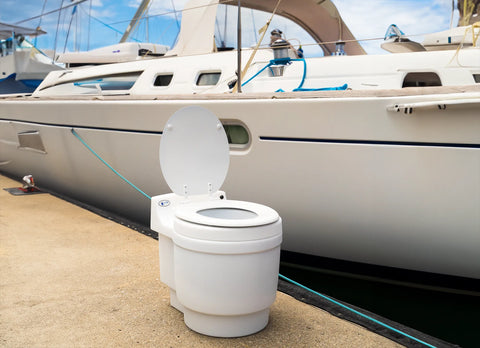
DryFlush and Waste-Sealing Toilets
A newer category of caravan toilet uses a liner system to wrap and contain waste rather than storing it in a cassette or separating it into liquid and solid containers. The Laveo DryFlush Toilet is one such example. Instead of using water to flush waste into a holding tank, DryFlush uses a refill liner and an electrically powered flush cycle that twists and seals waste inside the liner. After the cycle, a fresh section of liner is ready for the next use.
Key characteristics:
- No flushing water
- No toilet chemicals
- No cassette or black-water holding tank
- No liquid/solid separation
Also worth knowing:
- No external ventilation system required
- Rechargeable 12V operation
- Portable or mountable
- Waste contained inside the refill liner
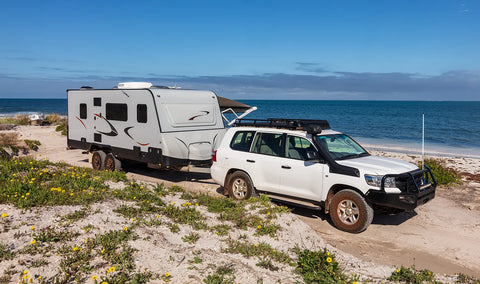
When Does DryFlush Make Sense for a Caravan?
DryFlush is not necessarily the right toilet for every caravan owner. For someone primarily looking for the lowest-cost toilet available, a basic portable chemical toilet may make more sense.
DryFlush is designed for travellers who place greater value on:
- avoiding cassette emptying
- reducing dependence on dump points
- conserving fresh water
- avoiding toilet chemicals
- travelling off-grid for longer
- avoiding liquid and solid waste separation
- having a toilet that can be removed or relocated
- minimising permanent plumbing modifications
DryFlush is less about replacing a $100 camping toilet and more about offering an alternative way to manage sanitation inside a caravan.
DryFlush vs Cassette Toilet
| DryFlush | Cassette Toilet | |
|---|---|---|
| Water for flushing | No | Usually |
| Chemical treatment | No | Common |
| Removable waste tank | No | Yes |
| Dump point dependence | Reduced / system differs | Typically yes |
| Waste handling | Sealed liner | Removable waste cassette |
| External hatch required | No | Usually |
| Permanent plumbing | No | Often |
| Portable | Yes | Usually fixed |
| Upfront price | Higher | Usually lower |
For travellers who regularly stay in established caravan parks, a cassette system can be practical and familiar. For travellers who frequently camp remotely, conserve water or dislike handling liquid waste tanks, a waterless sealing system may offer a different set of advantages.
SEE HOW DRYFLUSH WORKS →DryFlush vs Composting Toilet
| DryFlush | Composting / Separation | |
|---|---|---|
| Water required | No | No |
| Waste separation | No | Usually |
| Compost medium | No | Sometimes |
| External ventilation | No | Often |
| Solid/liquid management | Combined inside liner | Usually separate |
| Power | Rechargeable system | Often fan / varies |
| Portable | Yes | Model dependent |
| Ongoing consumable | Refill liner | Varies by system |
Both DryFlush and composting systems can work well for off-grid use, but they approach waste management very differently. Composting and separation systems generally manage separated waste over time. DryFlush instead contains waste inside a sealed liner system without requiring composting or urine separation.
READ THE FULL DRYFLUSH VS COMPOSTING GUIDE →Why Water Matters When Travelling Off-Grid
Fresh water is one of the limiting resources when free camping or travelling remotely. Any water used for flushing is water that cannot be used for drinking, cooking, showers, washing or cleaning.
DryFlush does not use flushing water. For travellers spending long periods away from mains water or caravan-park facilities, reducing unnecessary water consumption can increase independence.
Do All Caravan Toilets Need a Dump Point?
No. The disposal process depends on the toilet technology.
Cassette and chemical toilets
Waste is stored as liquid inside a removable holding tank and typically needs to be taken to an appropriate dump point.
Composting/separation toilets
Liquid and solids are managed separately, and disposal requirements depend on the system and local regulations.
DryFlush
Waste is contained inside its liner system. The sealed waste package must still be disposed of appropriately
and according to local waste requirements.

What About DryFlush Refills?
Each refill cartridge provides up to 15 flushes. A flush is one press of the flush button that activates the waste-wrapping and sealing cycle. A use is one visit to the toilet. With Pee Powder and multiple uses between flushes, one refill can provide up to 60 uses. For example, up to three urine-only visits followed by one bowel movement, then flushing, counts as up to four uses for one flush. Flush after a bowel movement. Actual capacity varies with flushing frequency, waste volume and toilet paper used. If you flush after every visit, one refill provides up to 15 uses.
For urine-only use, DryFlush Pee Powder can be used so that a full flush is not necessarily needed after
every urination. This can increase the number of practical toilet uses obtained from a cartridge.
- Replacement DryFlush refills are available in Australia
- Pee Powder available separately
- Two refill cartridges included: up to 30 flushes in total, or up to 120 uses with Pee Powder and multiple uses between flushes.
- New Laveo includes Pee Powder

Installing DryFlush in a Caravan
One advantage of the Laveo is that it does not require water plumbing, sewer plumbing, a waste cassette
hatch, or external ventilation ducting. The toilet can be used as a portable unit or secured in a caravan.
Customers should check: available bathroom floor space; access for cartridge replacement; charging/power
arrangement; safe mounting location; and product dimensions against the intended installation area.
Which Caravan Toilet Should You Choose?

Choose a basic portable chemical toilet if

Choose a cassette toilet if

Consider DryFlush if:
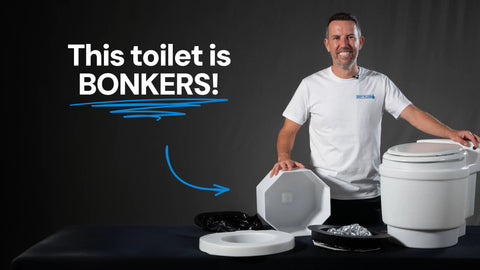
See How a DryFlush Caravan Toilet Works
Caravan Toilet FAQs
There is no single best toilet for every caravan. Cassette toilets suit travellers who prefer a fixed traditional setup; portable chemical toilets suit lower budgets; composting or separation toilets suit people comfortable managing separate waste; and waterless sealing systems such as DryFlush suit travellers looking to avoid water, chemical holding tanks, and cassette emptying
Some do and some do not. Many cassette and chemical toilets use water for flushing, while composting, separation and dry-flush systems can operate without flushing water.
Yes. Composting, separation and waste-sealing systems such as DryFlush can operate without a traditional cassette waste tank.
Yes. Composting, separation and DryFlush systems are examples of toilet technologies that do not rely on conventional cassette toilet chemicals.
A waterless caravan toilet manages waste without using flushing water. Different types include composting toilets, urine-diversion systems and waste-sealing/dry-flush toilets.
No. The Laveo DryFlush does not require a water connection, sewer connection, or conventional toilet plumbing.
No external ventilation duct is required for normal Laveo operation.
Up to 15 flushes per refill, or up to 60 uses with Pee Powder and multiple uses between flushes. Actual capacity varies with toilet habits, waste volume and toilet paper used. Maximum-use example: up to three urine-only visits followed by one bowel movement, then flushing.
Yes. Its waterless operation, lack of permanent plumbing and rechargeable power system make it well suited to many off-grid caravan applications.
Approximately 12.5 kg.
Yes. DryFlush can be secured for caravan use while still allowing access for refill replacement and servicing.
Dispose of sealed DryFlush waste appropriately and according to the waste-disposal requirements applicable to the location where you are travelling.

Want a Caravan Toilet Without Water, Chemicals or a Cassette Tank?
If you'd prefer to leave cassette emptying, toilet chemicals, and flushing water behind, the Laveo DryFlush
offers another way to handle caravan sanitation.
$2,294 AUD
$2,699 AUD
Save $405
- Waterless
- No toilet chemicals
- No cassette tank
- Rechargeable 12V operation
- 2 refill cartridges included
- Pee Powder included
- 2-year manufacturer warranty
- Australian support
Not sure if DryFlush is right for your caravan?
Talk to the DryFlush Australia team before you order.
Whether you're replacing an existing caravan toilet, planning a new installation or simply trying to determine which toilet system best suits the way you travel, we're happy to help.
Call: 1800 844 962
