

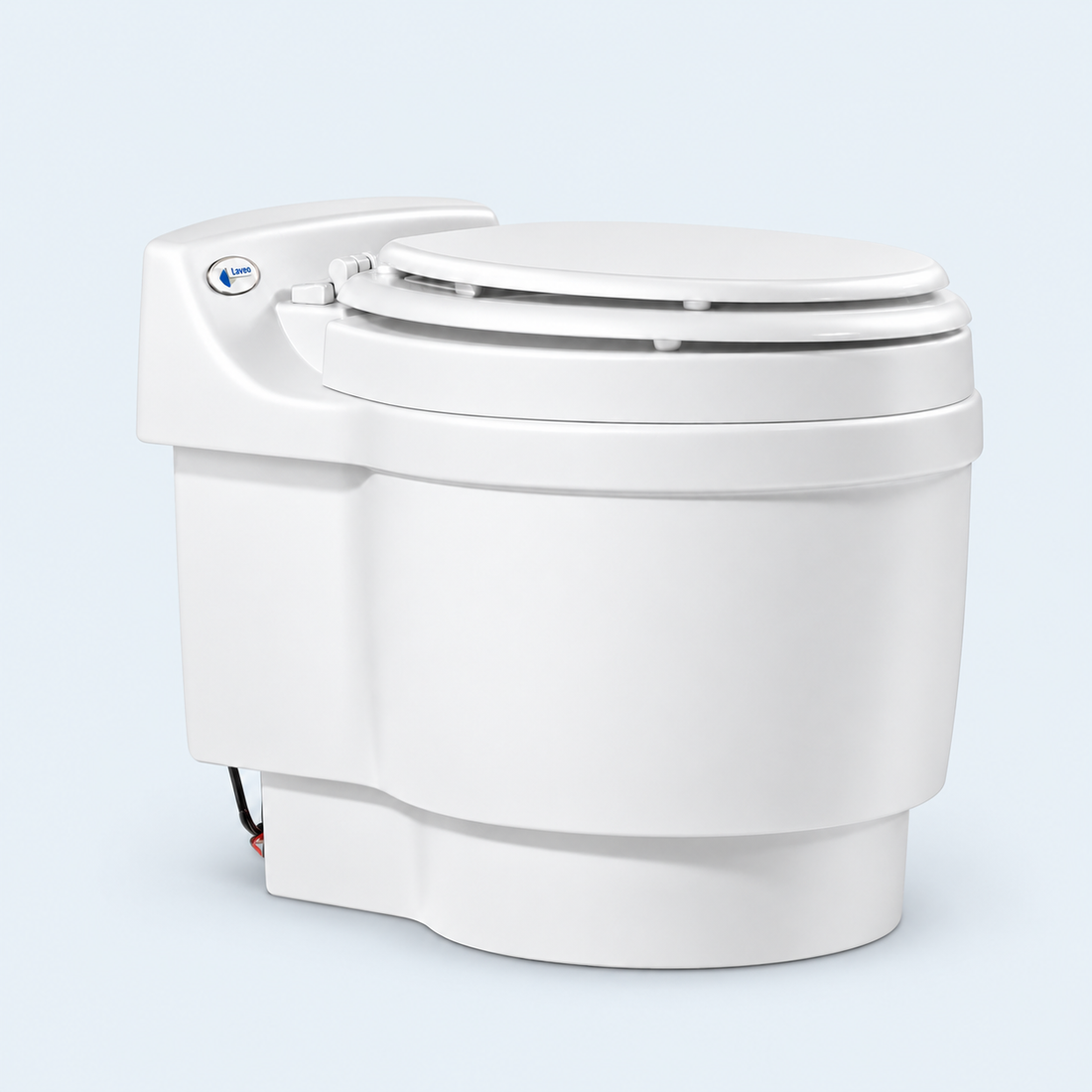
CASSETTE TOILET COMPARISON · AUSTRALIA
DryFlush vs cassette toilets: which suits your travel?
Compare powered liner containment with a cassette waste tank. Laveo DryFlush uses a removable 12V battery and replaceable liners, with no plumbing connection, flushing water or cassette to empty. Both approaches need routine cleaning and an accepted waste-disposal route; the right choice depends on how you travel.
Routine cleaning, cartridge changes, battery charging and permitted waste disposal remain part of normal use.
 For caravans, motorhomes and campers
Queensland stock & local support
Refills made in Queensland
No cassette to empty
5 year personal use warranty
WHY PEOPLE LOOK BEYOND THE CASSETTE
The cassette routine isn't for everyone
Cassette toilets are common in Australian caravans and motorhomes, but they come with an ongoing routine. The cassette fills and has to be carried to a suitable dump point, flushing water is used, toilet chemicals are often added, and emptying and rinsing the tank can be unpleasant.
Laveo DryFlush takes a different approach. Waste is contained in a replaceable liner after each powered flush, so there is no liquid tank to empty and no dump point to find. Sealed liners still need suitable disposal where local rules permit.
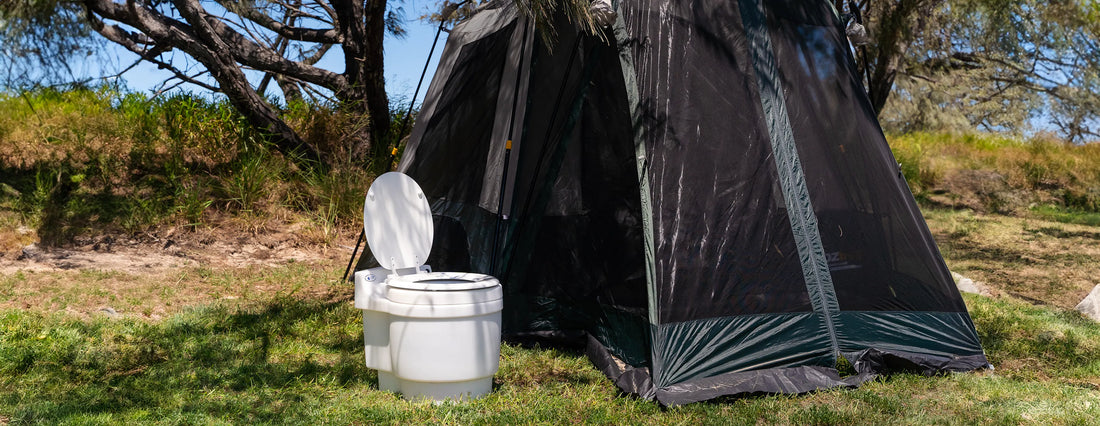
HOW DRYFLUSH COMPARES
DryFlush vs a typical caravan cassette toilet
Compare Laveo DryFlush with a typical caravan cassette toilet across the features that matter most. Individual cassette models vary.
- Water and power. DryFlush: 12V battery power, no flushing water, usable without a mains connection. Cassette: water is typically used for flushing; power needs vary by model.
- Waste and disposal. DryFlush: waste sealed in a liner cartridge with no liquid tank to empty; general-waste disposal only where local rules permit. Cassette: the removable tank is emptied at a suitable disposal facility.
- Installation. DryFlush: portable, with no plumbing or permanent water connection. Cassette: usually built into the van; mounting and connections vary by model.
- Cleaning and odour. DryFlush: the sealed liner helps manage odour; the toilet and surrounding surfaces still need cleaning. Cassette: regular cleaning; odour depends on the model, seals, ventilation and maintenance.
- Costs and consumables. DryFlush: replacement cartridges and battery charging. Cassette: purchase and running costs vary, including chemicals, water and maintenance.
- Key trade-off. DryFlush avoids flushing water and tank emptying but needs 12V power, cartridges and suitable disposal. A cassette offers an integrated system but needs emptying and model-specific supplies.
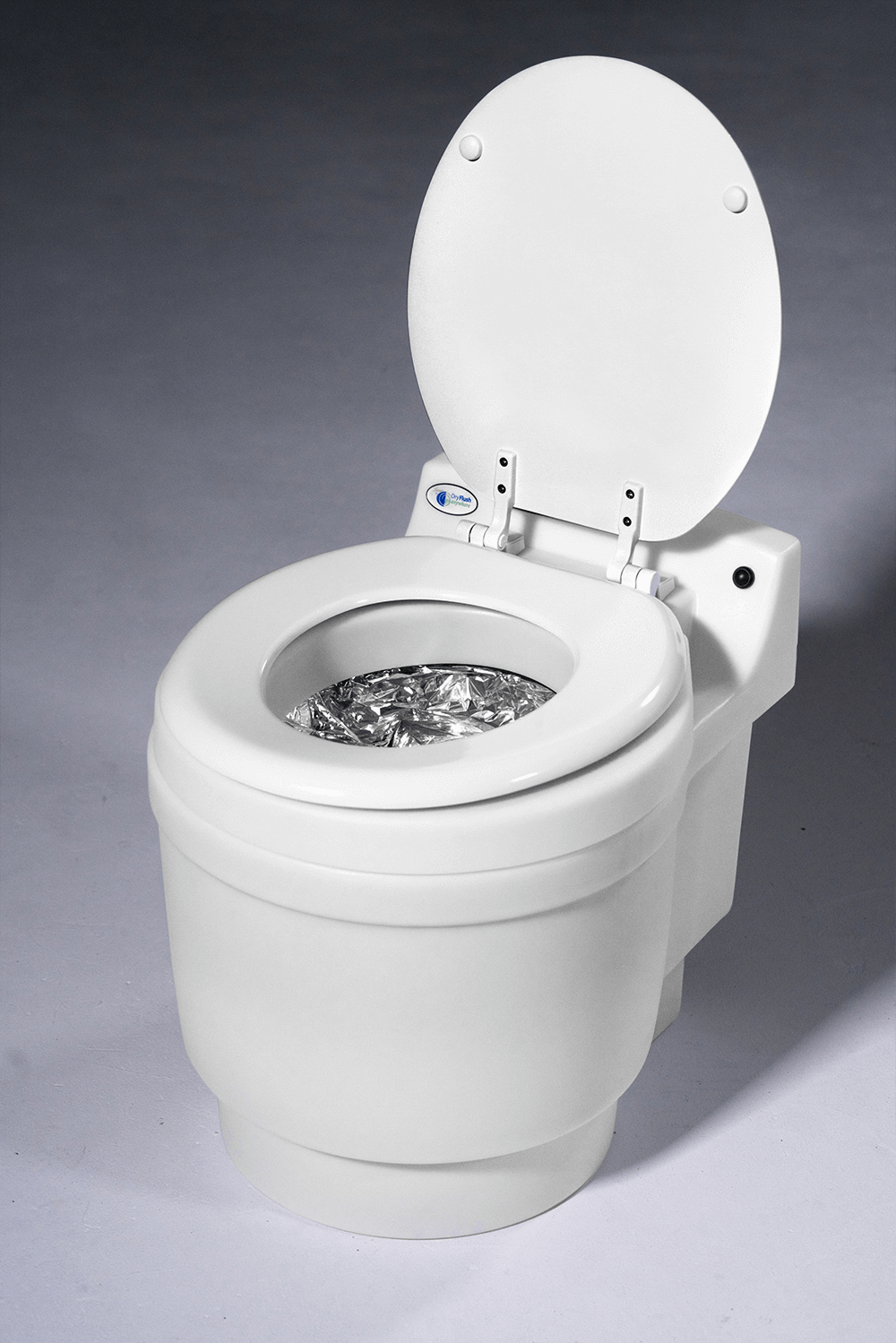
NO CASSETTE. NO DUMP POINT.
Never empty a chemical cassette again
This 49-second video shows why campers are moving away from chemical cassette toilets. The Laveo DryFlush uses no flushing water or toilet chemicals, and each powered flush seals waste inside a liner.
01 · UseUse the seat as you would a conventional toilet.
02 · Press flushThe powered cycle activates the mechanism.
03 · Twist & sealWaste is contained inside the liner.
04 · Ready againA fresh section is ready for the next visit.
Each cartridge provides 15 powered flushes. With Pee Powder and a suitable routine of up to three urine-only visits followed by one bowel movement and immediate flushing, up to 60 visits per cartridge may be possible. This is a conditional maximum, not a guaranteed yield. Always flush after bowel movements and sooner if needed.
WHY CONSIDER LAVEO
What changes when you switch
- No flushing water. DryFlush runs on a removable 12V battery, approximately 300 flushes per charge, so you can use it away from mains power.
- No liquid tank to empty. Waste is contained in a replaceable liner cartridge instead of a cassette.
- Odour management. Waste is sealed when you press flush. Correct use, routine cleaning and timely cartridge changes remain important.
- Fewer urine-only flushes. With Pee Powder used as directed, several urine-only visits can occur between flushes. Always flush after a bowel movement.
- Disposal still matters. Sealed liners must be disposed of appropriately, only where local council, site and operator rules permit.
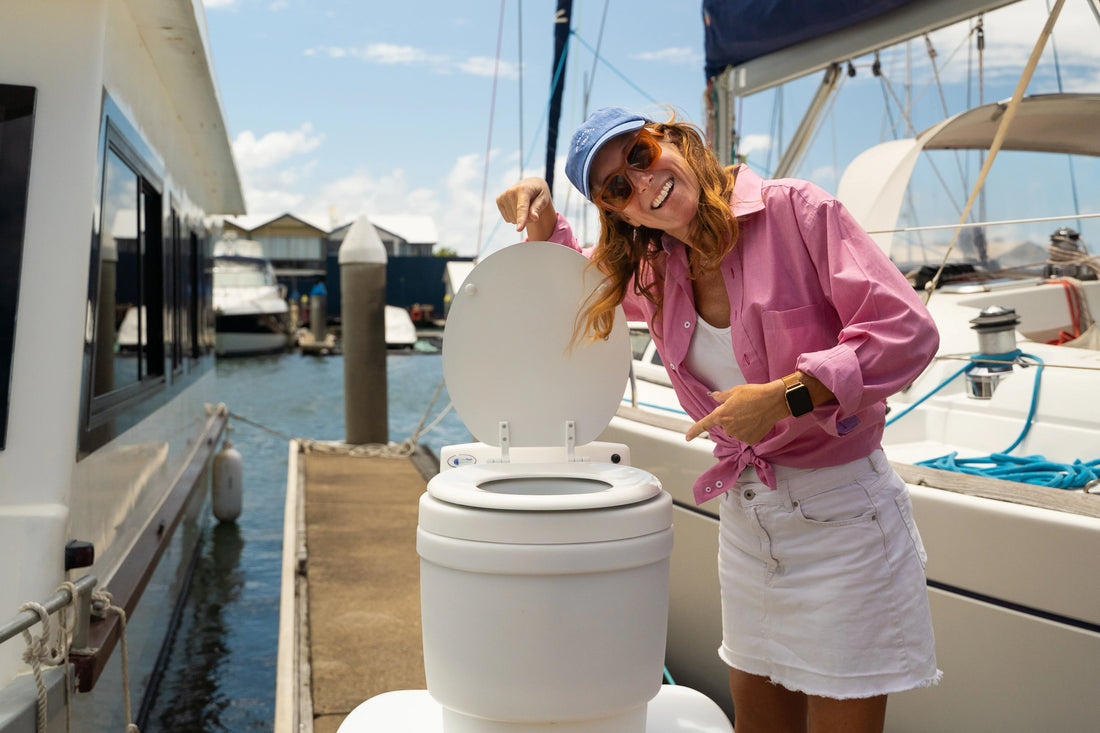
WHO IT SUITS
Who switches from a cassette?
- Caravan owners who want to spend less time looking for dump points.
- Motorhome owners wanting a toilet without a liquid waste tank.
- Freedom campers staying off-grid, who can plan for sealed-liner disposal where permitted.
- Weekend travellers who want less toilet maintenance on short trips.
- Remote campers heading to places without nearby facilities.
- Families on the road wanting a simpler routine for everyone.
Measure the space against the 407 mm width, 508 mm depth and 464 mm height; the toilet weighs approximately 12.5 kg. Secure it appropriately for travel.
MAKE AN INFORMED CHOICE
Know your running costs before you buy
Refill pack size and how often you flush determine your cartridge cost per visit. These examples use the current price of the 15-pack.
Current 15-pack price: $649.00 AUD
Flush after every visit$2.88
Per visit at 225 visits per pack (15 per cartridge).
Two visits per powered flush$1.44
Per visit at 450 visits per pack. Illustrative usage example.
Conditional maximum with Pee Powder$0.72
Per visit at up to 900 visits per pack. Maximum yield, not an average.
Cartridge costs only. Pee Powder and any delivery charges are additional. Actual costs rise if fewer visits are achieved.
Each cartridge provides up to 15 powered flushes. With Pee Powder, up to three urine-only visits followed by a bowel movement and immediate flushing can provide up to four uses per flush, or up to 60 uses per cartridge. This is a maximum-use example, not a guaranteed yield. Flush after every bowel movement and sooner if needed. Waste volume, paper and habits affect capacity.
Laveo owners can apply for our owner refill pricing. Ask our Australian team about refills, Pee Powder and supply planning.
Ask about refills ↗PLAN THE ONGOING TASKS
A clear routine for care and disposal
Check daily while in use. Wipe the seat and lid as needed, clean soiling promptly and follow the Australian manual for the rest of the unit. Keep the removable battery charged and plan cartridge changes. Do not charge the battery while it is connected to the toilet.
Remove and securely close the used liner according to the manual. Use suitable general waste only where local council, site and operator rules permit. Do not put used liners in recycling, organics bins, waterways or the environment.
Read the Australian user manualQUEENSLAND STOCK · AUSTRALIAN SUPPORT
Australian stock. A team in your corner.
Real stock, right here in Queensland. We hold Laveo toilets, refills and accessories in our Australian warehouse. In-stock orders often dispatch the same or next business day after payment.
Our Australian team brings over 30 years of business experience. From your first question to your next refill, you’re part of the DryFlush Australia family. We’re here long after the box arrives.
The toilet is made in the United States; refill bags are made in Queensland.
For toilets purchased on or after 1 November 2026: 5 year personal use warranty, including eligible NDIS personal use, or 2 year commercial warranty. The included battery has a separate 12 month warranty. Earlier purchases retain the cover promised at sale. Read the Australian warranty terms.
Talk to our Australian teamLAVEO DRYFLUSH
Explore the current toilet packages
White and Black Edition use the same twist-seal system. Check suitability for your caravan, motorhome or camping setup before ordering. View product details for the current package and price.
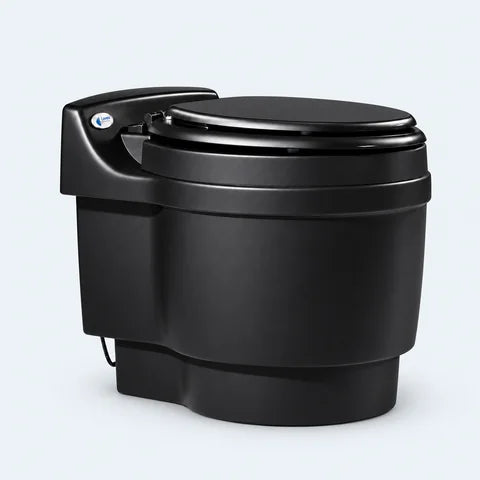
Standard Australian package: toilet, removable battery and cable, Australian charger, two refill cartridges (one installed and one spare), Pee Powder and user manual. Warranty cover depends on personal or commercial use; check the Australian warranty terms and product page.
Questions about switching from a cassette toilet
What is the biggest difference between DryFlush and a cassette toilet?
DryFlush seals waste in a liner when you press flush, so there is no cassette tank to empty. With Pee Powder used as directed, several urine-only visits can occur before flushing; always flush after a bowel movement. Sealed waste still requires suitable disposal where local rules permit.
Does DryFlush need water or plumbing?
No. It needs no flushing water and no plumbing connection. The flush is powered by the included removable 12V battery.
Does DryFlush smell?
Waste is sealed when the flush button is pressed, helping contain odours. Correct use, routine cleaning and timely cartridge changes remain important.
Do I need to empty a waste tank?
No. There is no blackwater or cassette tank to empty. Replace the full cartridge and dispose of the sealed liner through a suitable service where local rules permit.
Does DryFlush suit freedom camping?
It can, because there is no cassette to empty at a dump point. Keep the battery charged, carry enough cartridges and dispose of sealed liners only where local rules permit.
Which option is easier to maintain?
It depends on your routine. A cassette toilet needs emptying, rinsing and chemical top-ups at suitable facilities. DryFlush needs battery charging, cartridge changes and routine cleaning, with no liquid tank to empty.
YOUR NEXT STEP
Ready to leave the cassette behind?
Tell us about your van and how you travel. Our Australian team can help with product information, refills and current options.
Explore a Clesana C1 alternative
Comparing waterless toilets? See how Laveo DryFlush and Clesana C1 differ in portability, installation, power and running costs.
Keep planning your toilet setup
Explore the guides that match your travel, living space and expected daily use.
- Off-grid toilets for remote cabins and rural properties
- Tiny-home toilet space, daily routines and running costs
- Compare Laveo, Clesana C1 and LooSeal Elite
- Check space, power and refill requirements
- Explore portable toilet types and Australian use cases
Compare waterless toilets
Start with all three, or explore one competitor in detail.